Chinese

Lubrication Systems for Circular Knitting Machines: An Overview of Mist-Type and Electronic Pulse Oilers.
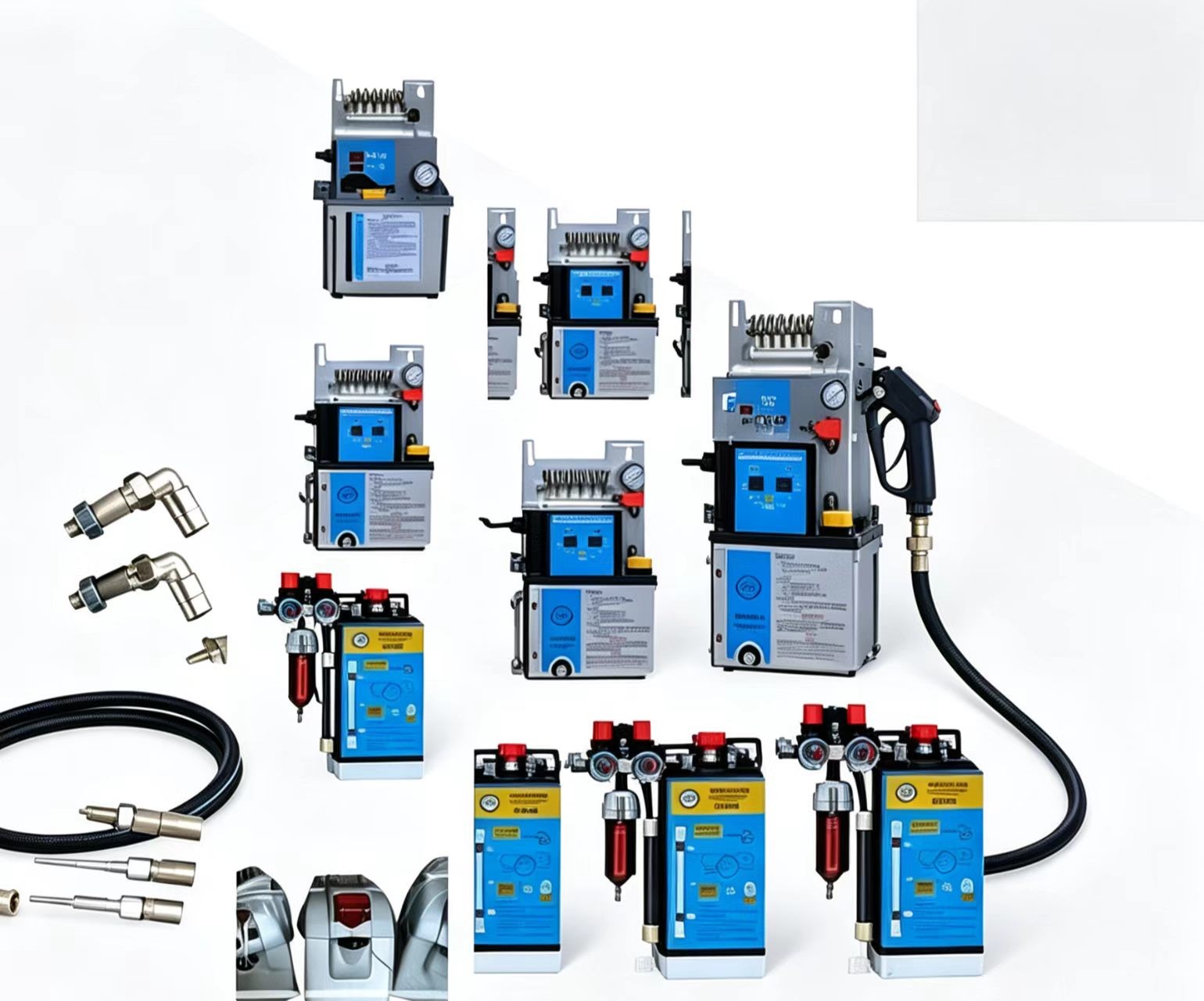
In actual production, circular knitting machines operate at high speeds with densely arranged needles, and whether lubrication is adequate directly affects fabric quality and component service life. Mist-type oilers atomize lubricating oil by means of compressed air and deliver it uniformly with the air stream to each lubrication point. They offer the advantages of large coverage area and thin, uniform oil film, making them particularly suitable for continuous lubrication of high-speed moving parts such as needle cylinders and cams. However, they are relatively sensitive to the cleanliness of the air supply and the viscosity of the oil. If air pressure is unstable or mist concentration is improperly adjusted, problems such as insufficient oil supply or oil mist escaping and contaminating the fabric may easily occur. Electronic pulse oilers, by contrast, rely on solenoid valves to inject a metered amount of oil at set pulse intervals. They provide precise oil quantity control, good repeatability, and are easy to interlock with equipment operating status to achieve on-demand lubrication. Their structure is relatively compact and maintenance is convenient, making them especially suitable for refined management of multiple independent lubrication points. Nevertheless, pulse oiling places higher demands on the sealing performance of oil lines and the reliability of solenoid valves. Once blockage or valve sticking occurs, individual lubrication points may be starved of oil without being easily noticed. Therefore, when selecting a system, comprehensive consideration should be given to machine speed, fabric type, workshop environment, and maintenance capability. For circular knitting machines operating at high speed and in continuous production, priority may be given to a hybrid solution combining mist-type and pulse-type systems: mist lubrication ensures large-area uniform lubrication, while pulse lubrication supplements the quantitative supply at critical points. At the same time, regardless of which method is adopted, a maintenance system should be established for regular checking of oil levels, cleaning of oil lines, and verification of oil supply quantities, with attention to oil mist emissions and waste oil recovery, so as to balance lubrication effectiveness with clean and safe production conditions. In actual maintenance, attention should also be paid to the selection and management of lubricating oils. Lubricating oils of different viscosity grades directly affect atomization performance and the flowability of pulse injection: excessively high viscosity easily causes pipeline blockage and poor atomization, while excessively low viscosity makes it difficult to form a stable oil film and aggravates wear between the needle cylinder and needles. It is recommended to adjust the oil grade in a timely manner according to changes in ambient temperature and to carry out comprehensive cleaning and parameter verification of the lubrication system at seasonal transitions. In addition, oil pressure or flow monitoring devices may be added at critical lubrication points, with oil supply status incorporated into equipment inspection records, so that abnormalities can be investigated promptly and batch fabric defects or component damage caused by hidden oil starvation can be avoided. As circular knitting machines develop toward higher speed and greater intelligence, lubrication systems are also gradually becoming deeply integrated with electronic control systems. Some new oilers are already equipped with fault self-diagnosis, oil starvation alarms, and remote monitoring functions, and can automatically adjust oil supply intervals and quantities according to the actual operating conditions of the machine, reducing manual intervention. When upgrading equipment, enterprises should simultaneously consider the compatibility and scalability of the lubrication system and reserve interfaces for subsequent connection to workshop data management platforms. In short, only by combining scientific selection, standardized maintenance, and intelligent monitoring can the performance of the lubrication system be fully brought into play and efficient, stable operation of circular knitting machines be ensured. On this basis, operator training and standardization must not be overlooked. The effectiveness of a lubrication system depends not only on the performance of the equipment itself but also on meticulous execution in daily operations. Simple and easy-to-understand lubrication work instructions should be prepared for different machine models, specifying key indicators such as oil type, oiling interval, atomization pressure range, and pulse parameter settings, and regular training and assessment should be conducted for machine operators and maintenance workers to ensure that they master basic fault identification and emergency response methods. For example, when regular oil stains appear on the fabric surface or localized wear intensifies, they should be able to quickly determine whether this is related to excessive mist volume or abnormal pulse oil supply in a particular line and promptly stop the machine for investigation. At the same time, lubrication management should be incorporated into the equipment life-cycle management system. From oil line acceptance inspection when new machines arrive at the factory and oil supply parameter calibration during the commissioning stage, to regular inspection and oil change records during use, and to oil line modification and component replacement on older machines, complete ledger files should be established. Through the accumulation and analysis of historical data, the wear patterns and oil consumption characteristics of each lubrication point under different operating conditions can be summarized to provide a basis for preventive maintenance. For enterprises producing with multiple machines in parallel, centralized oil supply or unified oil distribution can also be used to reduce management complexity and the probability of human error. It is worth emphasizing that the ultimate criteria for verifying lubrication effectiveness should rest on product quality and component condition. Enterprises may regularly sample and inspect fabric defects such as oil needle lines and horizontal bars, and combine these with wear measurement data for key parts such as needles and cams to reversely evaluate the actual effect of the lubrication scheme and fine-tune oil supply parameters accordingly. Only by forming a closed loop of selection and configuration, operational standardization, data management, and effectiveness verification can the lubrication system truly become a strong guarantee for the efficient and stable operation of circular knitting machines.