Chinese

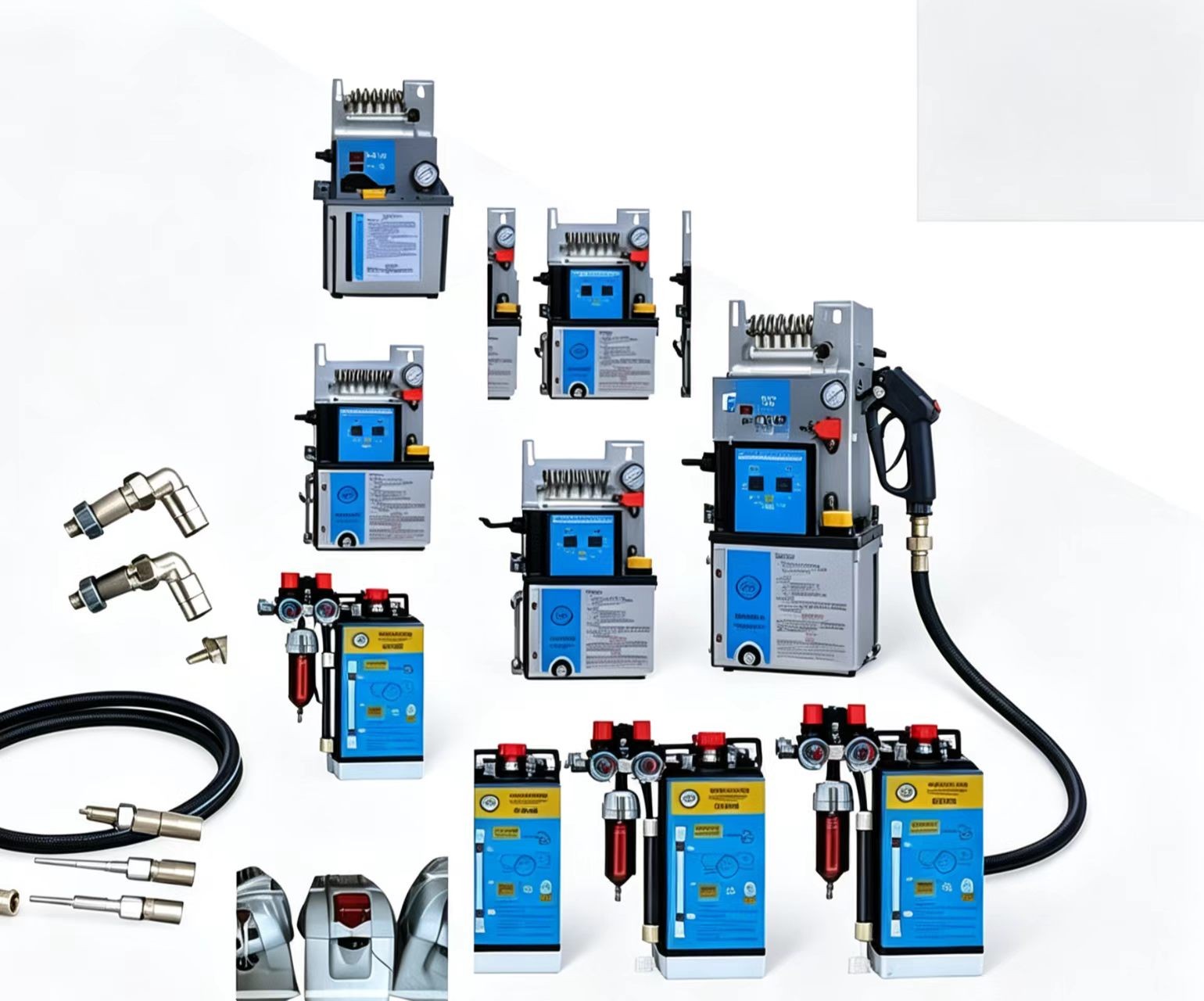
From Lubrication to Dust Removal: Understanding Common Accessories of Circular Knitting MachinesIn actual production, the stable operation of a circular knitting machine depends not only on the precise coordination of core mechanical components, but also on the synergistic role of various auxiliary accessories. Taking the lubrication system as an example, the oil mist lubricator, oil pipe connectors, and progressive distributor together form a "hidden artery," precisely delivering lubricating oil to high-speed moving parts such as needles, cams, and the needle cylinder. If the oil circuit becomes blocked or the oil quantity is improperly adjusted, the consequences may range from oil stains on the fabric surface in mild cases to needle groove wear and needle breakage in severe cases. Therefore, regularly checking the oil drip rate of the oil mist lubricator, cleaning the filter element, and observing the movement of the distributor indicator rod are indispensable steps in routine maintenance. The dust removal process is equally important. During high-speed knitting, circular knitting machines generate large amounts of fly fibers and short lint. Once these fibers are drawn into the gap between the needle cylinder and the dial, they may cause sluggish needle movement or even needle collision. For this reason, the combined use of blowing devices, dust-removal fans, and dust collection bags is particularly critical. The angle of the blowing nozzle should direct the airflow tangentially along the needle cylinder, which can effectively remove fly fibers without blowing them deep into the cam tracks. The negative pressure of the dust-removal fan should match the machine speed: if the air volume is too small, dust removal will be incomplete, while if it is too large, it may easily interfere with yarn tension. In addition, dust collection bags should be cleaned or replaced regularly to avoid increased air resistance and motor overheating caused by excessive dust accumulation. In addition to the above two categories of accessories, yarn feeders, tension discs, and yarn breakage auto-stop devices also fall within the scope of common wearing parts. If the yarn feeder belt becomes loose, it will cause uneven yarn feeding, thereby affecting horizontal stripes on the fabric surface and weight stability. Once the ceramic discs of the tension disc are worn, their surfaces become rough, easily scratching the yarn and generating hairiness. The sensitivity of the yarn breakage auto-stop device directly affects whether the machine can stop in time when yarn is missing, reducing the production of batch defects. It can thus be seen that although common accessories of circular knitting machines are mostly "supporting roles," they run through the entire process of lubrication, dust removal, yarn feeding, and monitoring. Only by establishing an accessory ledger, clarifying replacement cycles, and keeping inspection records can these seemingly small components truly play their safeguarding role and enable the equipment to maintain high efficiency and stability during long-term operation. It is worth further explaining that the selection and matching of accessories also affect overall performance. Taking the oil mist lubricator as an example, different machine models differ in oil consumption and air circuit pressure. If an oil mist lubricator of mismatched specifications is replaced arbitrarily, oil dripping may be too fast, causing waste and oil stains, or too slow, resulting in insufficient lubrication. The tension adjustment of the yarn feeder belt should also refer to the machine manual: if too tight, bearing wear will accelerate; if too loose, slipping and inaccuracy will occur. In addition, the replacement of tension disc ceramic discs should not be judged solely by appearance. It can be comprehensively evaluated in combination with yarn hairiness detection data and fabric quality feedback to avoid "replacing before failure" or "running with defects." At the management level, it is recommended to classify common accessories by criticality: lubrication and dust removal accessories that directly affect needle life and fabric quality should be listed as key monitoring items with shortened inspection intervals; yarn feeding and auto-stop accessories can be managed through a combination of pre-shift inspections and monthly maintenance. At the same time, accessories should be stored in a moisture-proof and dust-proof manner; rubber parts should avoid direct sunlight, and ceramic parts should be protected from impact and chipping. Only by forming a closed loop of selection, use, maintenance, and inventory management can common accessories of circular knitting machines truly shift from "passive replacement" to "active prevention," providing solid guarantees for efficient long-term operation of the equipment. On this basis, it is particularly necessary to establish a traceable accessory usage file. For each key accessory, the time nodes from warehousing and installation to replacement, machine number, fault phenomena, and handling results should all be recorded in detail, facilitating later analysis of accessory life patterns and failure modes. For example, if a certain circular knitting machine repeatedly experiences failure of the progressive distributor indicator rod to move, a review of the ledger can reveal whether it is related to oil viscosity, filter replacement cycles, or moisture content in the air source, thereby allowing targeted adjustment of maintenance strategies rather than simply replacing the part. At the same time, the level of understanding of accessories among operators and maintenance personnel also directly affects usage results. Enterprises can regularly organize special training, conducting drills on practical contents such as oil drip rate adjustment of the oil mist lubricator, correction of blowing nozzle angle, and replacement standards for tension discs, so that frontline personnel both understand the principles and know how to judge, avoiding the hidden waste of "wearing out good parts" due to improper operation. It should also be recognized that accessory management is not an isolated link but should be interconnected with overall machine condition monitoring. With the help of vibration sensing, current monitoring, or simple online fabric inspection methods, abnormal signals can be captured in the early stage of accessory performance degradation, such as motor current changes caused by attenuation of dust-removal fan air volume, or yarn tension fluctuations caused by yarn feeder slipping, thereby moving replacement timing earlier and reducing unplanned downtime. For workshops operating multiple machines, accessory consumption can also be counted by machine group to identify high-consumption machines and investigate whether their process parameters are reasonable, realizing a shift from "uniform replacement" to "differentiated management." Ultimately, the efficient operation of circular knitting machines is built on the reliable support of every detail. Only by integrating accessory selection, inspection, recording, and data analysis into one, forming a virtuous cycle of continuous improvement, can the equipment always maintain stable output amid an intense production pace and create more lasting economic benefits for the enterprise.