Chinese

From Lubrication to Dust Removal: Understanding Common Accessories of Circular Knitting Machines.
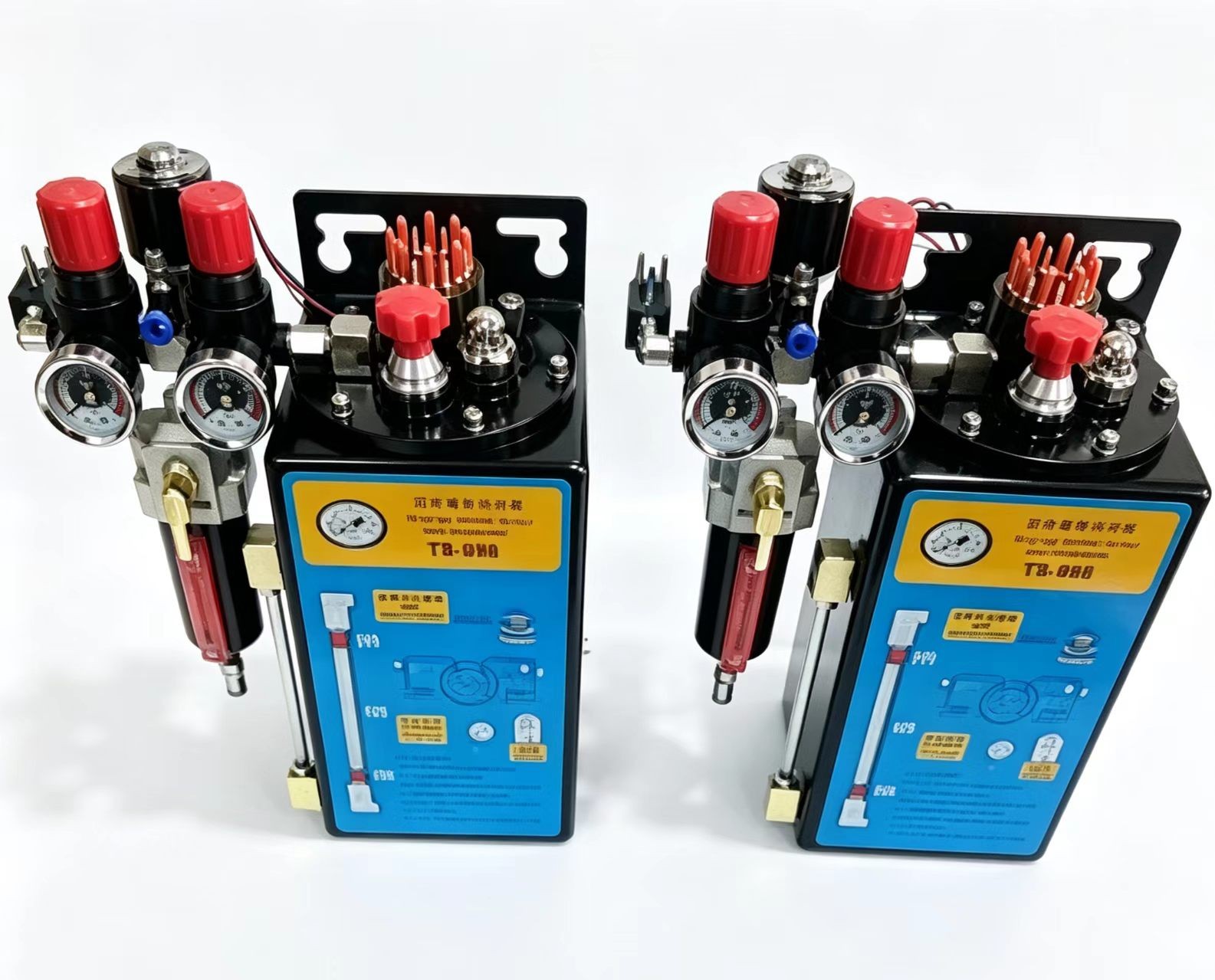
The lubrication system is the fundamental guarantee for the stable operation of circular knitting machines. During high-speed operation, continuous friction occurs among key components such as the needle cylinder, knitting needles, and cams; if lubrication is inadequate, it may at best affect fabric quality and at worst lead to component wear and even machine shutdown. Common lubrication methods include centralized automatic lubrication and manual oiling. A centralized lubrication system delivers lubricating oil to each lubrication point at regular intervals and in fixed quantities via an oil pump, making it suitable for enterprises engaged in long-term continuous production; manual oiling, by contrast, relies more on the experience and sense of responsibility of operators and is suitable for small-batch, multi-variety production scenarios. Whichever method is adopted, regularly checking whether the oil passages are unobstructed and whether the oil is clean are links that cannot be neglected in daily maintenance.
Dust removal is likewise an easily overlooked yet crucial part of circular knitting machine accessory management. During the knitting process, short fibers and fly lint on the yarn surface continuously shed; if not removed in time, these fiber dusts will accumulate in needle grooves, cam tracks, and around yarn feeders, causing obstruction of needle movement, an increased yarn breakage rate, and even mechanical failures. Common dust removal accessories include blowing devices, dust-removal fans, and dust collection bags. Blowing devices use directed airflow to blow fly lint away from critical parts, while dust-removal fans, together with ducts, collect dust in a centralized manner; the two are often used in combination to form a complete dust removal system. Reasonably arranging the angle and air volume of the blowing nozzles can ensure dust removal effectiveness while avoiding excessive airflow that interferes with yarn tension.
It is worth emphasizing that lubrication and dust removal are not two independent links, but an integrated whole that cooperates and jointly maintains equipment condition. When oil stains mix with fly lint, stubborn dirt is very easily formed and adheres to the surfaces of moving parts, affecting lubrication effectiveness and increasing cleaning difficulty. Therefore, in actual production, a standardized operating sequence of "dust removal first, lubrication second" should be established, and periodic maintenance plans should be formulated to incorporate accessory inspection, cleaning, and replacement into daily management. Only in this way can the effectiveness of various accessories be fully brought into play, the service life of circular knitting machines be extended, and the stability of fabric quality and continuous improvement of production efficiency be guaranteed. On this basis, enterprises should also attach importance to operator training and responsibility implementation. The effectiveness of lubrication and dust removal depends to a large extent on whether frontline personnel execute according to procedures. Simple and easy-to-understand maintenance checklists can be formulated to clarify specific tasks for each shift, each week, and each month, such as oil level inspection, oil passage cleaning, blowing nozzle cleaning, and dust collection bag replacement, with dedicated personnel assigned to record and review. At the same time, an early warning mechanism should be established in combination with equipment operating status, for example by monitoring abnormal oil pressure, bearing temperature rise, or sudden changes in yarn breakage rate, and promptly investigating whether these are related to poor lubrication or excessive dust accumulation, thereby transforming passive repair into proactive prevention. In addition, accessory selection and oil management also need to match the dust removal and lubrication system. Different machine models and different yarn raw materials have different requirements for lubricating oil viscosity and cleanliness; improper selection can easily cause oil passage blockage or oil stain residue. The nozzle position and air volume of blowing devices should be reasonably adjusted according to needle cylinder diameter and knitting speed to avoid cleaning dead corners. For areas where fly lint accumulates heavily, local suction hoods may be added or airflow organization optimized to reduce secondary fiber deposition. Regular performance evaluation of lubrication and dust removal accessories and timely replacement of aged oil pipes, worn fan blades, and damaged dust collection bags are necessary to ensure the long-term stable operation of the entire system. Ultimately, lubrication and dust removal management reflect the level of refined equipment management. Only by incorporating both into a standardized and institutionalized maintenance system, supplemented by data records and effect feedback, and continuously optimizing maintenance cycles and operational details, can circular knitting machines always maintain good operating condition and provide solid support for enterprises to achieve efficient, low-consumption, and high-quality production goals. In the actual implementation process, attention should also be paid to the compatibility and installation details of lubrication and dust removal accessories. For example, the oil pipe routing of a centralized lubrication system should avoid strong airflow areas as much as possible to prevent oil from being blown away or aging accelerated; the layout of dust suction ducts should also not cross and entangle with oil passages, so as to avoid mutual interference during maintenance. Some enterprises, when modifying dust removal systems, often focus only on fan power while ignoring duct sealing, resulting in attenuated suction and increased energy consumption, which is counterproductive. Therefore, it is recommended to carry out overall planning of airflow and oil passages before installation or modification, and when necessary to use layout suggestions provided by equipment manufacturers to ensure that accessories work in coordination rather than constrain one another.
At the same time, the influence of environmental factors on lubrication and dust removal effectiveness should not be underestimated. Fluctuations in workshop temperature and humidity will change the flowability of lubricating oil: excessively high humidity easily causes fiber dust to absorb moisture and clump, adhering deep in needle grooves and becoming difficult to remove; excessively low humidity easily generates static electricity, causing fly lint to adhere to machine part surfaces. In this regard, temperature and humidity monitoring devices can be installed in the workshop to control environmental parameters within appropriate ranges, and lubrication frequency and dust removal intensity can be adjusted according to seasonal changes. For example, during the plum rain season, the dust collection bag replacement cycle should be appropriately shortened, while in dry seasons anti-static measures need to be strengthened, reducing from the source the possibility of dust accumulation and oil stain adhesion.
Finally, it is recommended that enterprises establish archival management of lubrication and dust removal, recording the time, personnel, consumable replacement status, and abnormal handling for each maintenance session, and periodically summarizing and analyzing them to identify fault-prone locations and weak links. Through the continuous accumulation of operating data, a maintenance experience database suitable for their own machine models and product structures can gradually be formed, enabling lubrication and dust removal work to move from experience-driven to data-driven and truly achieve refined and sustainable management of circular knitting machines.